Chest pain does not automatically mean you need an invasive angiogram, but certain symptoms and test results require rapid assessment because treatment cannot wait for a routine appointment. By the end, you will know which findings lead a heart doctor to consider coronary angiography, when CT or another test comes first, and why the angiogram result does not automatically mean you need a stent.
Key takeaways
- Call emergency services for ongoing or worsening chest pain.
- A heart doctor weighs symptoms, ECG, risk factors, and other test results.
- CT coronary angiography suits some patients; invasive angiography suits others.
- Angiography shows narrowed arteries but does not decide treatment alone.
When chest pain needs emergency assessment, not an outpatient angiography appointment
Call emergency services immediately for ongoing or worsening chest pain, not a routine heart doctor appointment or coronary angiography for chest pain. Do not drive yourself. Pressure or tightness that spreads to the arm, jaw, back, or shoulder is especially concerning, as are breathlessness, unexplained sweating, nausea, fainting, sudden weakness, or severe deterioration.
- Suspected heart attack symptoms that persist, recur, or worsen
- Chest pain with fainting, shock, marked breathlessness, or a very fast or slow pulse
- New symptoms in someone with known coronary disease, diabetes, or a previous heart attack
A 12-lead ECG and high-sensitivity troponin guide the first decision, but a normal first result does not rule out acute coronary syndrome when symptoms remain concerning. Repeat ECGs, repeat troponin testing, examination, and observation may be needed.
| Situation | Angiography urgency | What it means |
|---|---|---|
| ST-elevation myocardial infarction | Immediate | Invasive angiography is performed with a view to urgent revascularisation, usually by angioplasty and stenting when suitable. |
| Non-ST-elevation acute coronary syndrome | Immediate, early, or delayed | Instability, recurrent pain, heart failure, ECG changes, troponin elevation, and overall clinical risk determine timing. |
| Unstable angina | Urgent assessment | Ischaemic symptoms occur without the troponin rise required for myocardial infarction; angiography timing depends on risk and instability. |
| Severe deterioration | Immediate emergency care | Treat collapse, shock, severe breathlessness, or dangerous rhythm disturbance before arranging any outpatient test. |
Do not wait for a clinic slot while symptoms are active. Even when angiography is needed, emergency assessment must come first.
How a heart doctor decides whether coronary angiography is justified
A heart doctor does not justify invasive coronary angiography from chest pain alone. The decision combines the symptom pattern, examination, test results, existing coronary disease, and the risk of missing a dangerous blockage.
1. Take a detailed history and examine you. New, worsening, severe, or persistent exertional angina raises concern, as do breathlessness, fatigue, nausea, sweating, or fainting. Diabetes, chronic kidney disease, older age, and female sex are reasons not to dismiss these atypical symptoms.
2. Review the 12-lead ECG and high-sensitivity troponin. An abnormal ECG, rising troponin, or reduced heart pumping function on echocardiogram can shift the decision toward invasive angiography. A normal first ECG or troponin does not exclude acute coronary syndrome if the symptoms remain concerning.
3. Use non-invasive testing when the presentation is stable and low risk. Exercise testing or stress imaging can reveal inducible ischaemia, while CT coronary angiography (CCTA) can show obstructive coronary disease. High-risk stress-test findings, an abnormal CCTA, or inconclusive results can support a CAG test for heart patients.
4. Consider the treatment history and symptom burden. Recurrent symptoms after angioplasty or bypass surgery, known coronary disease, or severe angina that continues despite medication can favour invasive angiography.
5. Check whether another diagnosis fits better. Reflux, musculoskeletal pain, pulmonary embolism, or aortic dissection requires targeted assessment rather than CAG alone. For stable low-risk chest pain, CCTA or functional imaging often comes first; invasive angiography is reserved for higher-risk findings or symptoms that remain uncontrolled.
Invasive angiography or CT: which test fits the situation?
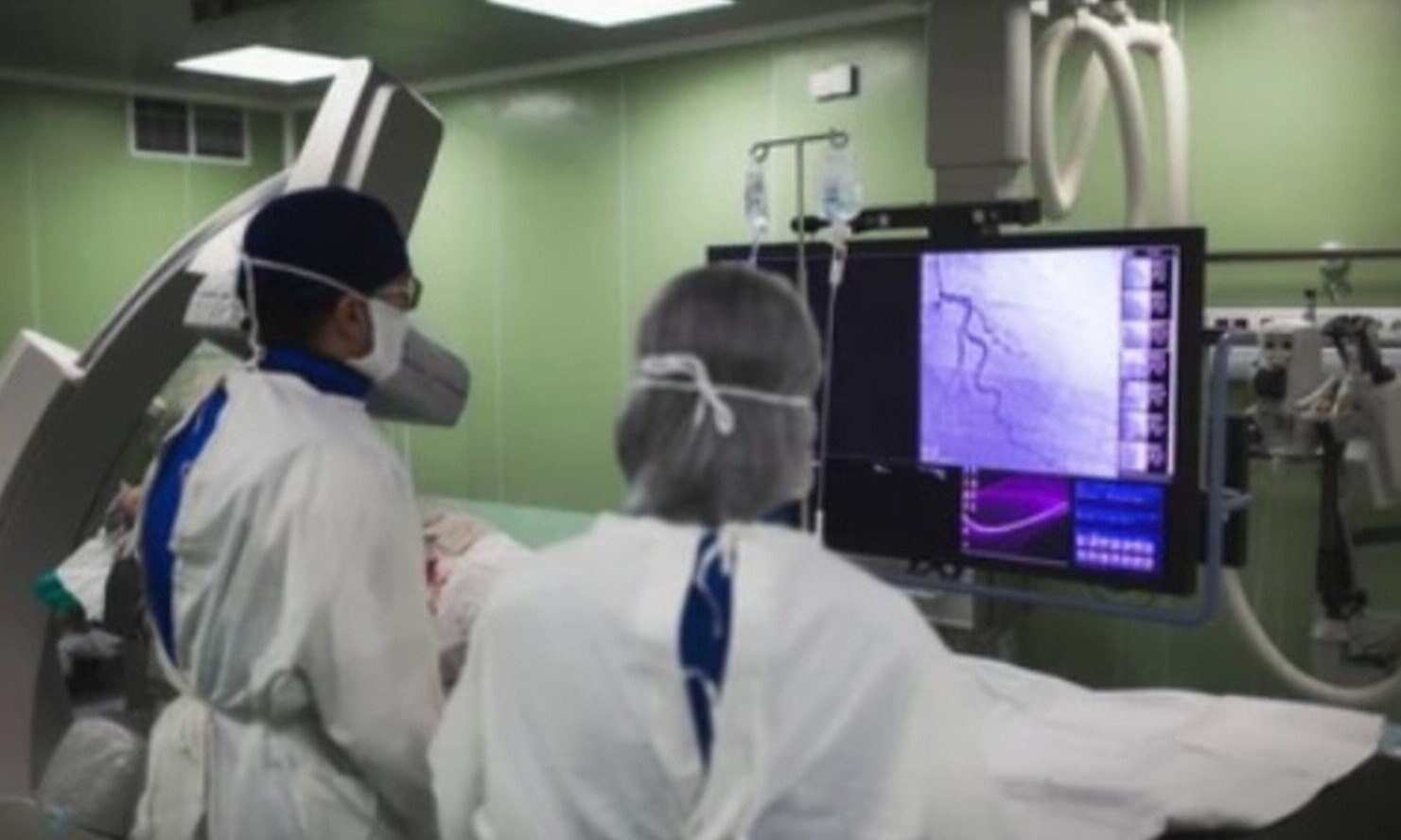
A heart doctor may choose coronary angiography for chest pain when a blockage needs treatment during the same procedure. Invasive CAG passes a thin catheter through the radial artery at the wrist or femoral artery at the groin, using local anaesthetic, contrast dye, and X-ray images.
| Option | What it involves | When it fits |
|---|---|---|
| Invasive CAG | Catheter-based X-ray imaging of the coronary arteries | Suspected heart attack, unstable symptoms, high-risk results, or a need to proceed directly to angioplasty or bypass surgery |
| CCTA | Non-invasive CT scan after intravenous contrast | Stable patients whose heart rate and rhythm allow clear images, especially when an initial anatomical assessment is appropriate |
Kidney function, a previous contrast reaction, pregnancy or possible pregnancy, heart rate, irregular rhythm, and heavy coronary calcium influence the choice. A fast or irregular heartbeat can blur CCTA images, while extensive calcium can make narrowing difficult to judge. Discuss possible pregnancy before either scan.
Before CAG, tell the team about kidney disease, diabetes medicines, anticoagulants, allergies or previous contrast reactions, pregnancy possibility, and every medicine you take. Do not stop or alter medicines without instructions from the treating team.
Bruising, soreness, or a small bleed at the entry site is common. Rare serious complications include arterial injury, major bleeding, contrast-related kidney injury, arrhythmia, heart attack, stroke, and death; emergency procedures and severe illness increase risk.
What the angiogram can show—and why it does not decide treatment alone
An angiogram shows where the artery lumen is narrowed and how severe that narrowing appears. A 70% narrowing is an anatomical finding, not proof that it causes ischaemia or explains every symptom. A two-dimensional image can understate diffuse disease, hide a lesion where vessels overlap, or make calcium obscure the true lumen.
For an intermediate-looking stenosis, pressure-based tests can show whether blood flow is actually impaired:
- Fractional flow reserve (FFR) measures pressure across the narrowing during increased blood flow.
- Instantaneous wave-free ratio (iFR) measures the pressure difference without giving a vasodilator.
- Intravascular ultrasound (IVUS) and optical coherence tomography (OCT) show the artery wall, plaque, calcium, and stent position in greater detail.
After CAG, the three broad treatment paths are:
- Medical treatment alone, when symptoms and objective testing do not justify revascularisation.
- Percutaneous coronary intervention (PCI) with a balloon and stent.
- Coronary artery bypass grafting (CABG), particularly when anatomy makes surgery more suitable.
The choice weighs symptoms, objective ischaemia, left-main or multivessel disease, diabetes, other illnesses, heart function, coronary anatomy, and surgical risk. A CAG test for heart patients therefore supports a decision; it does not make the decision alone.
After angioplasty or bypass, recurrent symptoms do not automatically mean another stent. The angiogram may identify a new blockage, in-stent restenosis, or graft disease. A heart doctor for angiography, such as Dr Chetan Jain, can match those findings with your symptoms and other test results before recommending treatment.
Related service
CAG Coronary Angiography (CAG) is a specialized diagnostic procedure used to visualize the coronary arteries — the blood vessels that supply the heart... View service → |
Which specialist can arrange angiography, and what should you do next?
A general cardiologist can assess symptoms, examine you, review a 12-lead ECG and blood tests, and order further investigations. An interventional cardiologist is trained to perform catheter-based coronary angiography and coronary intervention, but not every cardiologist performs these procedures.
Use this decision guide:
| Situation | What to do next | Possible assessment |
|---|---|---|
| Active or worsening chest pressure, breathlessness, sweating, fainting, or pain spreading to the arm, jaw, back, or shoulder | Call emergency services; do not arrange a routine heart doctor for angiography appointment | Emergency ECG, troponin, treatment, and urgent angiography when indicated |
| Recurrent exertional pain, abnormal ECG, troponin, stress test, or scan | Seek prompt cardiology assessment | Invasive angiography, CCTA, stress imaging, or another targeted test |
| Stable symptoms with low estimated risk | Discuss a first test rather than assuming angiography | CCTA, stress imaging, or another non-invasive assessment |
Diabetes, chronic kidney disease, older age, and being a woman can produce heart disease without crushing chest pain. Breathlessness, unusual fatigue, nausea, sweating, or fainting still deserve assessment.
Bring prior ECGs, blood-test results, scan reports, your complete medication list, and details of any angioplasty or bypass surgery. Do not self-diagnose if pulmonary embolism, aortic dissection, or another emergency is possible; those conditions need urgent medical evaluation.
Frequently asked questions
When does chest pain need emergency assessment instead of outpatient coronary angiography?
Call emergency services immediately for ongoing or worsening chest pain, especially when pressure spreads to the arm, jaw, back, or shoulder. Breathlessness, sweating, nausea, fainting, sudden weakness, or severe deterioration also require emergency assessment. Do not drive yourself.
How does a heart doctor decide whether coronary angiography is justified?
The doctor considers your symptoms, ECG findings, cardiac blood tests, medical history, risk factors, physical examination, and results from other heart investigations. The urgency and likely benefit of seeing the coronary arteries guide the decision.
When is invasive angiography preferred over CT coronary angiography?
CT coronary angiography is a non-invasive option for selected patients when the images are likely to be clear and immediate treatment is not expected. Invasive angiography fits situations requiring precise artery assessment, urgent evaluation, or possible treatment during the same procedure.
What can a coronary angiogram show, and does it decide treatment?
A coronary angiogram can show the location and severity of narrowed or blocked coronary arteries and the blood flow through them. Treatment also depends on symptoms, heart function, overall health, disease pattern, and discussion of medicines, stents, or bypass surgery.
Which specialist can arrange a coronary angiography appointment?
A cardiologist, especially an interventional cardiologist, can assess whether coronary angiography is appropriate and arrange the procedure. Contact a heart doctor for angiography after urgent symptoms have been ruled out.