
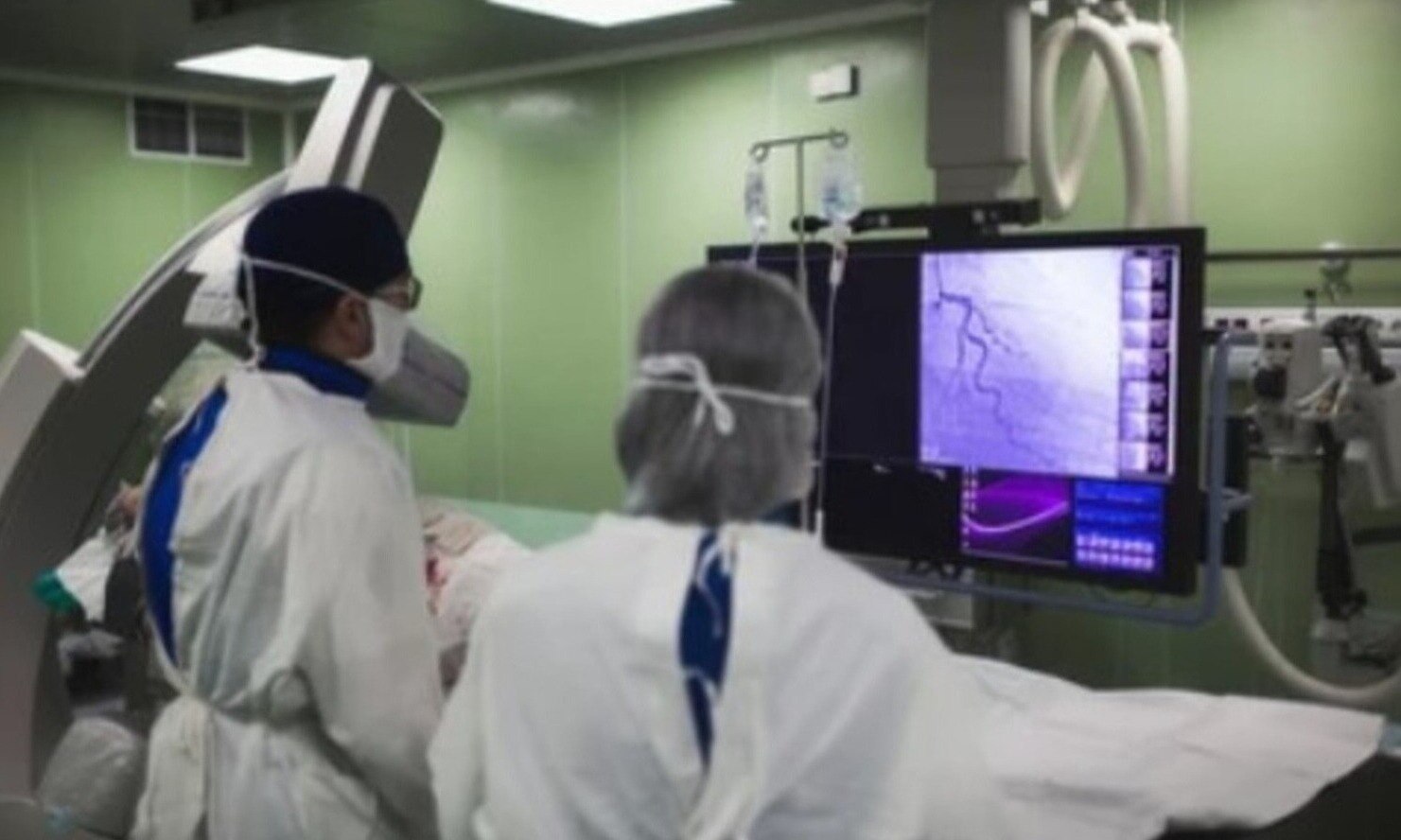
After a heart attack, coronary angiography is used to determine whether an artery is still blocked, which vessel caused the infarction, and whether blood flow has been restored. You will learn when CAG is urgent, when follow-up testing is reasonable, what the procedure involves, and how to recover safely afterward.
Key takeaways
- CAG shows blocked arteries, restored blood flow, and whether further treatment is needed.
- Echocardiography measures pumping strength; CAG maps coronary artery blockages.
- Follow access-site instructions and seek urgent help for chest pain, severe bleeding, or breathlessness.
- Compare catheter facilities, emergency access, recovery guidance, and specialist experience in Nashik.
What does CAG answer after a heart attack, and when is it urgent?
CAG after a heart attack answers four practical questions: Is a coronary artery still blocked, which vessel caused the infarction, has blood flow been restored, and does the artery need further treatment? The test uses an X-ray catheter and iodinated contrast to show the coronary-artery lumen; it does not measure heart-muscle damage or pumping strength.
| Situation | What CAG is deciding | Usual urgency |
|---|---|---|
| Active STEMI | Find the acute blockage and proceed to primary PCI when appropriate | Immediate |
| Unstable acute coronary syndrome | Identify a dangerous culprit lesion and restore flow | Urgent, guided by instability |
| Stable recovery | Check a known problem only when symptoms, ECG findings, or the treatment plan require it | Delayed or follow-up |
Seek emergency assessment for persistent or returning chest pain, recurrent ECG changes, shock or very low blood pressure, dangerous arrhythmias, breathlessness, fainting, or other evidence of ongoing ischaemia. Do not arrange routine CAG while these symptoms continue.
A stable patient may not need an immediate repeat procedure when a recent angiogram clearly identified the culprit artery, blood flow was restored, symptoms have settled, and a treatment plan is already in place. Repeating an invasive test adds contrast exposure, bleeding risk, and procedure time without answering a new question.
An angiography specialist explains CAG for heart attack recovery by matching the test to the patient’s current risk. CAG after heart attack is a decision about coronary arteries, not a complete recovery assessment; echocardiography may be needed to assess ejection fraction and wall-motion damage.
How do doctors choose between repeat CAG, echocardiography, stress testing, and CT angiography?
CAG answers a coronary-artery lumen question: it shows where contrast flows, which narrowing remains, and whether another intervention is needed. It does not measure heart-muscle damage or pumping strength. For cag after heart attack, echocardiography supplies that missing information by measuring ejection fraction, wall-motion abnormalities, valves, and mechanical complications.
| Option | What it answers | When it may fit |
|---|---|---|
| Echocardiography | How well the left ventricle pumps and whether complications exist | Stable recovery, breathlessness, abnormal examination, or routine post-infarction assessment |
| Stress testing | Whether exertion triggers symptoms, ECG changes, or reduced blood flow | Stable symptoms when recurrent ischaemia is uncertain and immediate invasive testing is not indicated |
| Coronary CT angiography | Whether coronary arteries show significant narrowing using contrast CT | Stable, selected patients when heart rate, kidney function, prior stents, and image quality are suitable |
| Repeat CAG | The coronary lumen directly, with a route to treatment | Recurrent chest pain, new ECG changes, high ischaemia probability, or an unclear or changed prior angiogram |
The choice also depends on kidney function, prior angiogram findings, symptoms, ECG results, and contrast exposure. A blockage on CAG does not automatically earn a stent. The team weighs lesion location and complexity, vessel size, diabetes, kidney function, proven ischaemia, surgical risk, and whether staged treatment or bypass surgery offers a safer, more durable result.
What should you expect before, during, and immediately after CAG?
1. Before CAG, sign consent after the team explains bleeding, kidney injury, contrast reactions, and possible treatment during the same session. Follow the fasting instructions, provide a complete medication list, and ask whether to adjust insulin, diabetes tablets, or blood thinners.
The team should check recent serum creatinine and estimated glomerular filtration rate, establish intravenous access, and ask specifically about any previous reaction to iodinated contrast. A shellfish allergy is not the same thing.
2. During the procedure, local anaesthetic numbs the entry site. The cardiologist guides a thin catheter through the radial artery at your wrist or the femoral artery at your groin, injects iodinated contrast, and records X-ray images of the coronary arteries.
Radial access generally causes less access-site bleeding; femoral access remains useful for certain anatomy, larger devices, or complications.
3. Diagnostic angiography only shows the artery; it does not automatically mean balloon treatment or a stent. If the findings support immediate treatment, the team may continue in the same session. Otherwise, the result may lead to a staged procedure or a bypass-surgery opinion.
The clinical picture, artery anatomy, symptoms, ECG, kidney function, and surgical risk—not the scan order wording alone—determine that choice.
Afterward, staff remove the catheter, apply a wrist band or groin pressure dressing, monitor your pulse and puncture site, and review medicines, activity, hydration, and follow-up. Uncomplicated diagnostic CAG is often same-day; treatment with a balloon or stent requires longer observation.
How long does angiography recovery take, and which warning signs need urgent help?
Practical angiography recovery guidance depends on whether CAG was diagnostic or included emergency PCI, balloon treatment, or stent placement. Uncomplicated diagnostic CAG is often a same-day procedure after monitored observation. Before discharge, confirm puncture-site care, medicines, activity limits, follow-up, and who to call; leaving hospital does not mean heart-attack recovery is complete.
| Option | Observation and activity | Discharge planning |
|---|---|---|
| Radial diagnostic CAG | Walk once the wrist bandage is cleared. Keep the site clean and dry; avoid heavy lifting with that arm until instructed. | Driving and desk work often resume sooner than after femoral access, but follow your team’s restriction. |
| Femoral diagnostic CAG | Lie flat for the instructed period, then walk with supervision. Avoid heavy lifting, straining, and soaking the groin until cleared. | Driving and work wait until walking is comfortable and the access site is stable. |
| Emergency PCI, balloon treatment, or stent | Expect longer observation. Increase walking gradually through a supervised cardiac-rehabilitation plan, not independent exercise alone. | Follow-up includes heart medicines, risk-factor control, and review of work, driving, and exercise limits. |
Do not stop aspirin, clopidogrel, prasugrel, ticagrelor, or any other prescribed post-PCI medicine without the cardiology team’s instruction. Seek emergency help for:
- Persistent bleeding, increasing swelling, or severe pain at the wrist or groin.
- A rapidly enlarging groin lump, or a cold or pale hand or leg with numbness.
- Chest pain, breathlessness, fainting, or cold sweating.
What should you check when arranging coronary artery imaging in Nashik?
Check capability, not the pin on the map, before arranging coronary artery imaging in Nashik. Ask the facility:
- Does an experienced cath-lab team perform and interpret CAG?
- Do staff check serum creatinine, estimated glomerular filtration rate, kidney disease, and previous iodinated-contrast reactions?
- Can the team use both radial access at the wrist and femoral access at the groin?
- Is monitored post-procedure observation available before discharge?
- Can the centre provide emergency percutaneous coronary intervention (PCI) for an acute blockage?
- Is there a defined referral pathway to cardiac surgery when bypass surgery is safer than stenting?
| Facility type | What it means for your decision | When it applies |
|---|---|---|
| Diagnostic CAG unit | Suitable for planned imaging when you are stable and the follow-up plan is clear | Delayed assessment after recovery |
| PCI-capable cath lab | Can escalate from imaging to balloon treatment or stent placement when indicated | Recurrent ischaemia or a newly identified treatable blockage |
| PCI centre with surgical referral | Offers a route to bypass-surgery assessment for complex disease | Left-main disease, multiple blockages, diabetes, or unsuitable anatomy |
Recovery also requires cardiac rehabilitation, smoking cessation, blood-pressure and diabetes control, cholesterol-lowering treatment, gradual physical-activity progression, and adherence to prescribed medicines. Cardiac rehabilitation is a structured programme, not permission to exercise alone.
Dr Chetan Jain can help discuss whether follow-up CAG or another test fits your recovery plan. Ongoing chest pain, breathlessness, fainting, or cold sweating requires emergency services, not a routine appointment.
Related services
CAG Coronary Angiography (CAG) is a specialized diagnostic procedure used to visualize the coronary arteries — the blood vessels that supply the heart... View service → |
Angioplasty and Stent Placement Angioplasty and Stent Placement Angioplasty and stent placement is a minimally invasive, image-guided procedure used to treat coronary artery disease (CAD) — a condition caused by... View service → |
Frequently asked questions
What does CAG answer after a heart attack?
CAG shows whether a coronary artery remains blocked, identifies the likely culprit vessel, confirms blood flow, and helps determine whether further treatment is needed.
How do doctors choose between CAG, echocardiography, stress testing, and CT angiography?
Doctors match the test to the question: CAG maps arteries and permits treatment, echocardiography assesses heart-muscle movement and pumping, stress testing assesses exercise-related blood flow, and CT angiography provides non-invasive coronary images.
What should you expect before, during, and after CAG?
Expect a medical review and preparation before the procedure, local anaesthetic and contrast during catheter imaging, followed by observation and access-site checks.
How long does angiography recovery take?
Recovery depends on the access site, findings, and whether treatment was performed. Follow discharge instructions and avoid strenuous activity until your clinician clears it.
Which warning signs need urgent help after CAG?
Seek urgent help for new chest pain, severe breathlessness, fainting, uncontrolled bleeding, rapidly enlarging swelling, or a cold, pale, numb limb.
Related service
Post-Heart Attack Care & Rehab Post-Heart Attack Care & Rehab Holistic recovery plans post-myocardial infarction including medication, lifestyle counseling, and cardiac rehabilitation. View service → |