
Chest pressure and an abnormal heart test create a time-sensitive decision: book a cardiology assessment, or go straight to emergency care. You will learn how to recognise that difference, arrange the right kind of coronary evaluation in Nashik, and prepare safely for catheter-based angiography.
Key takeaways
- Treat severe or recurring chest symptoms as an emergency, not a routine booking.
- Ask whether ECG and troponin testing should come before angiography.
- Confirm fasting, medicines, kidney function, allergies, consent and transport plans.
- Keep the angiogram report and images for follow-up treatment decisions.
When chest symptoms require emergency care, not a booking
Persistent or recurrent chest pressure is an emergency concern, especially with breathlessness, fainting, cold sweating, nausea, collapse, or pain spreading to the arm, jaw, back, or shoulder. Do not wait for a routine coronary angiography booking in Nashik.
Call local emergency services or go to the nearest emergency department immediately. Do not drive yourself. The hospital can perform an ECG and serial troponin blood tests, monitor your heart rhythm, and decide whether you need urgent catheterisation.
New ECG changes, raised troponin, unstable angina symptoms, or repeated pain after a heart attack require urgent cardiology assessment; STEMI or very-high-risk acute coronary syndrome can require direct transfer to a catheterisation laboratory.
Seek an urgent outpatient assessment only when symptoms have stopped, you are clinically stable, and a clinician advises that waiting is safe. Ask for an angiography specialist for urgent coronary angiography in Nashik through a hospital with emergency capability, not a diagnostic centre that only performs scans.
- Confirm 24-hour catheterisation, interventional cardiology, monitored recovery, and emergency PCI access.
- Provide the symptom start time, recurrence pattern, previous heart disease, ECG or troponin results, and current medicines.
- If the clinic line is unavailable or symptoms return, stop pursuing the booking and go to an emergency department.
How to arrange urgent coronary angiography in Nashik
If symptoms are ongoing or returning, do not wait for a routine coronary angiography booking in Nashik. Go to the nearest emergency department or call emergency services for chest pressure, breathlessness, fainting, cold sweating, collapse or suspected heart attack.
For an urgent but stable referral, make the call to a hospital cath-lab desk or cardiology clinic and ask these questions:
1. “Is a 24-hour cardiac catheterisation laboratory operating today, with an interventional cardiologist available?” Confirm that the hospital performs emergency PCI, not only ECG, echocardiography or CT imaging.
2. Give the patient’s symptoms, onset time, ECG findings, troponin result, referral diagnosis, previous stents, allergies, kidney disease and current medicines. State whether pain is continuing or recurring and ask for a specific arrival time.
3. Ask whether angioplasty and stenting can follow the angiogram during the same admission. Verify access to monitored recovery, anaesthesia support, intensive care and cardiac surgery, or a documented emergency transfer arrangement.
4. Confirm fasting instructions, diabetes-medicine and blood-thinner instructions, required records, escort arrangements, expected observation period and how results will be communicated. Do not stop medicines without the hospital’s direction.
“Angiography specialist” and cag specialist in nashik are search terms, not proof of training or hospital privileges. Ask who will perform the procedure, their recognised cardiology and interventional training, and whether they hold privileges at that hospital. Dr Chetan Jain’s clinic can clarify the referral route, but verify emergency coverage directly with the receiving hospital.
If the booking line is unanswered, use the hospital emergency department rather than leaving a message and waiting.
Related service
CAG Coronary Angiography (CAG) is a specialized diagnostic procedure used to visualize the coronary arteries — the blood vessels that supply the heart... View service → |
Which heart test fits the clinical question?
Choose the test by the clinical question: an ECG records electrical activity, an echocardiogram shows structure and pumping, a stress test looks for exertional ischemia, CT coronary angiography images arteries without a catheter, and catheter coronary angiography images them directly while allowing treatment.
| Test | What it answers | When it is insufficient or unsuitable |
|---|---|---|
| ECG | Is there an electrical abnormality, rhythm problem, or possible acute ischemia? | A normal ECG does not exclude coronary disease or a heart attack. |
| Echocardiogram | How are the heart’s chambers, valves, pumping function and surrounding tissues working? | It does not directly show narrowed coronary arteries. |
| Stress test | Does exertion or medication provoke symptoms or ECG/imaging evidence of reduced blood flow? | Avoid it during unstable symptoms; it also requires a safe ability to exercise or tolerate stress medication. |
| CT coronary angiography | Does contrast-enhanced CT show plaque or narrowing in the coronary arteries? | Fast heart rates, heavy calcification, kidney disease, contrast allergy or pregnancy can make it unsuitable or less reliable. |
| Catheter coronary angiography (CAG) | Where is the blockage, and could angioplasty or stenting treat it now? | It is invasive and does not by itself explain every symptom when arteries are non-obstructive. |
Searching “angiography clinic near me” is not enough. Confirm that the site performs catheter CAG, has an interventional cardiologist, a monitored recovery area and an emergency PCI pathway; a centre offering CT or echocardiography may have none of these.
What to confirm before and during catheter angiography
For a coronary angiography booking in Nashik, give the team the reason for referral, symptom timing, ECG or troponin findings, medication list, kidney disease, bleeding history and any previous iodinated-contrast reaction. A shellfish allergy is not the same thing. Never stop an anticoagulant or antiplatelet drug without procedure-specific instructions.
Ask the hospital to confirm these details before you travel:
- Arrival time, fasting period and whether clear fluids are allowed
- Instructions for insulin, diabetes tablets, anticoagulants and antiplatelets
- Whether an escort is required and whether same-day discharge is planned
- Expected observation time and how results will be communicated
- Whether angioplasty and stent placement could follow if a blockage is found
- Emergency contact instructions if symptoms worsen before arrival
The hospital must provide these instructions because preparation changes when PCI, sedation or kidney precautions are expected.
- You sign consent after the cardiologist explains the indication, alternatives, contrast reaction, bleeding, kidney injury and the possibility of angioplasty.
- Staff check your identity, observations, blood tests and intravenous access. A local anaesthetic numbs the wrist or groin before a sheath enters the artery.
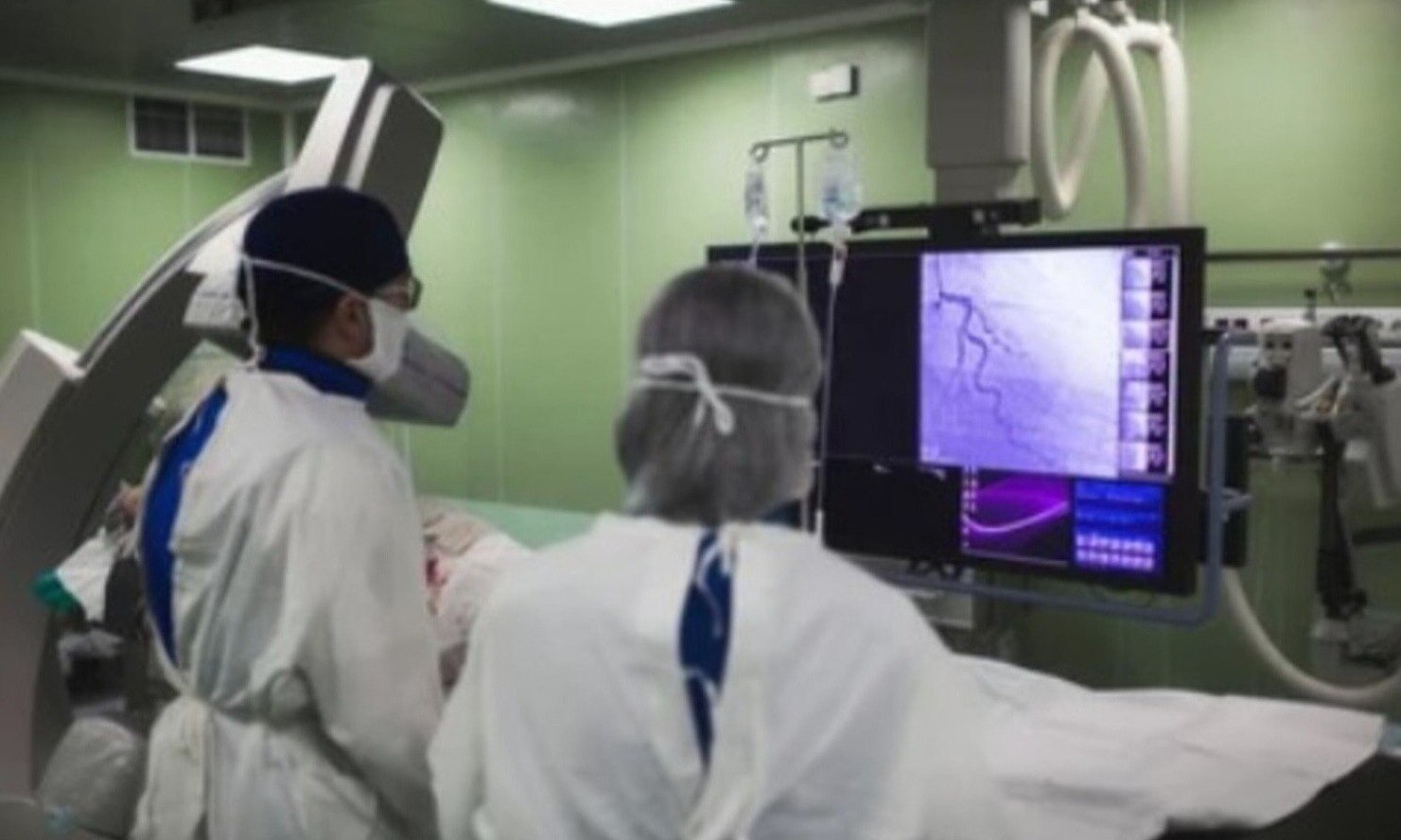
- The cardiologist guides a catheter under X-ray to the coronary arteries, injects iodinated contrast and records images. You may feel brief warmth or flushing.
- Staff remove the sheath, seal or compress the access site and monitor your pulse, blood pressure, bleeding and urine output. Follow instructions on fluids, walking, wound care and urgent return after discharge.
Risks, records and decisions after the angiogram
The decision after angiography depends on both the coronary anatomy and your immediate risk. Compare access-site bleeding or a wrist/groin haematoma, contrast reaction, kidney injury, rhythm disturbance, heart attack and stroke; serious complications are uncommon, but the team must explain your individual risk before consent.
Tell the CAG specialist in Nashik about chronic kidney disease, diabetes, pregnancy or possible pregnancy, anaemia, a bleeding disorder, blood-thinner use, previous stroke, and any prior reaction to iodinated contrast. A shellfish allergy is not the same as a contrast reaction.
Report the exact previous symptoms, because the team may adjust the contrast plan or prescribe premedication.
Bring these records:
- Recent ECGs, troponin results, echocardiogram or stress-test reports
- CT scans, previous angiograms, discharge summaries and referral letters
- A current medicine list with doses, especially anticoagulants, antiplatelets, insulin and metformin
- Kidney-function results, allergy details, blood group and identification
Search for an angiography specialist for urgent coronary angiography in Nashik through a hospital with 24-hour catheterisation, PCI, anaesthesia and a complication-transfer plan.
| Angiogram finding | What can happen next |
|---|---|
| Significant blockage | Medication, pressure-wire or intravascular-imaging assessment, balloon angioplasty and stenting, or bypass referral |
| No obstructive disease | Evaluation for spasm, microvascular angina or another cause; symptoms still require treatment |
| Uncertain or complex anatomy | Further imaging, staged PCI or transfer to cardiac surgery |
A stent is not automatic: symptoms, urgency and lesion anatomy determine the choice.
Frequently asked questions
When should I seek emergency care instead of booking coronary angiography?
Seek emergency care for persistent or recurrent chest pressure, especially with breathlessness, fainting, cold sweating, nausea, collapse, or pain spreading to the arm, jaw, back, or shoulder. Do not wait for a routine appointment.
How can I arrange urgent coronary angiography in Nashik?
Contact an angiography specialist or cardiac hospital promptly, describe the symptoms and their timing, and ask whether emergency evaluation is needed. Carry current prescriptions, previous ECGs, reports, allergy details and identification.
Which heart test fits the clinical question?
An ECG and blood tests such as troponin help assess an acute heart problem. Echocardiography evaluates heart structure and function, CT coronary angiography images coronary arteries without a catheter, and invasive coronary angiography provides detailed catheter-based artery images when clinically indicated.
What should I confirm before catheter coronary angiography?
Confirm the reason for the test, preparation instructions, medicines that need review, kidney-function results, contrast-allergy history, consent, expected recovery and how you will return home. Ask when and how you will receive the report and images.